Practical, evidence-aware reading for people who want to feed with more confidence and less guilt.
Full articles available in English and Chinese.
AI-generated editorial image
HEALTHY WEIGHT · 3 MIN READ
Healthy weight is not the smallest number.
Body condition, muscle, age and daily life all matter. A useful goal is a stable condition your pet can maintain comfortably, not a dramatic drop on the scale.
snaps.pet editorial · Updated 5 October 2026 · General education
A healthy-weight goal should help your pet feel well and keep moving comfortably. It is not a competition to reach the smallest number on the scale. A measured weight is useful, but age, muscle, body condition and health give that number context.
Start with a small, repeatable record
Choose a safe way to weigh your pet and note the date, weight and unit. Use the same scale where practical. For a small pet, a clinic scale may be easier than balancing them on a household scale. Do not force a frightened animal to stay still for a reading.
Alongside the weight, write down the food and recipe, daily amount, treats and recent changes. AAHA’s nutrition screening includes diet history, activity, body condition and muscle condition—not weight alone.
Body condition adds context
Ask your veterinary team to show you how to use a species-appropriate body-condition chart. Looking and gently feeling are both part of an assessment; a fluffy coat can hide body shape. A photograph cannot confirm kilograms, muscle condition or a diagnosis.
Count the little extras
Training rewards, toppers and snacks belong in the food diary too. AAHA’s guidance for healthy cats and dogs recommends that complete and balanced food provide at least 90% of calorie intake, with other foods no more than 10%. This is a general guide, not a custom diet for a pet with medical needs.
Use trends to start a conversation
Agree an appropriate goal and review interval with your vet, especially for growing animals, seniors or pets with an existing condition. An unexpected change deserves attention; avoid simply cutting food because one reading is higher. The aim is a sustainable routine that supports your particular pet.
snaps.pet editorial · Updated 5 October 2026 · General education
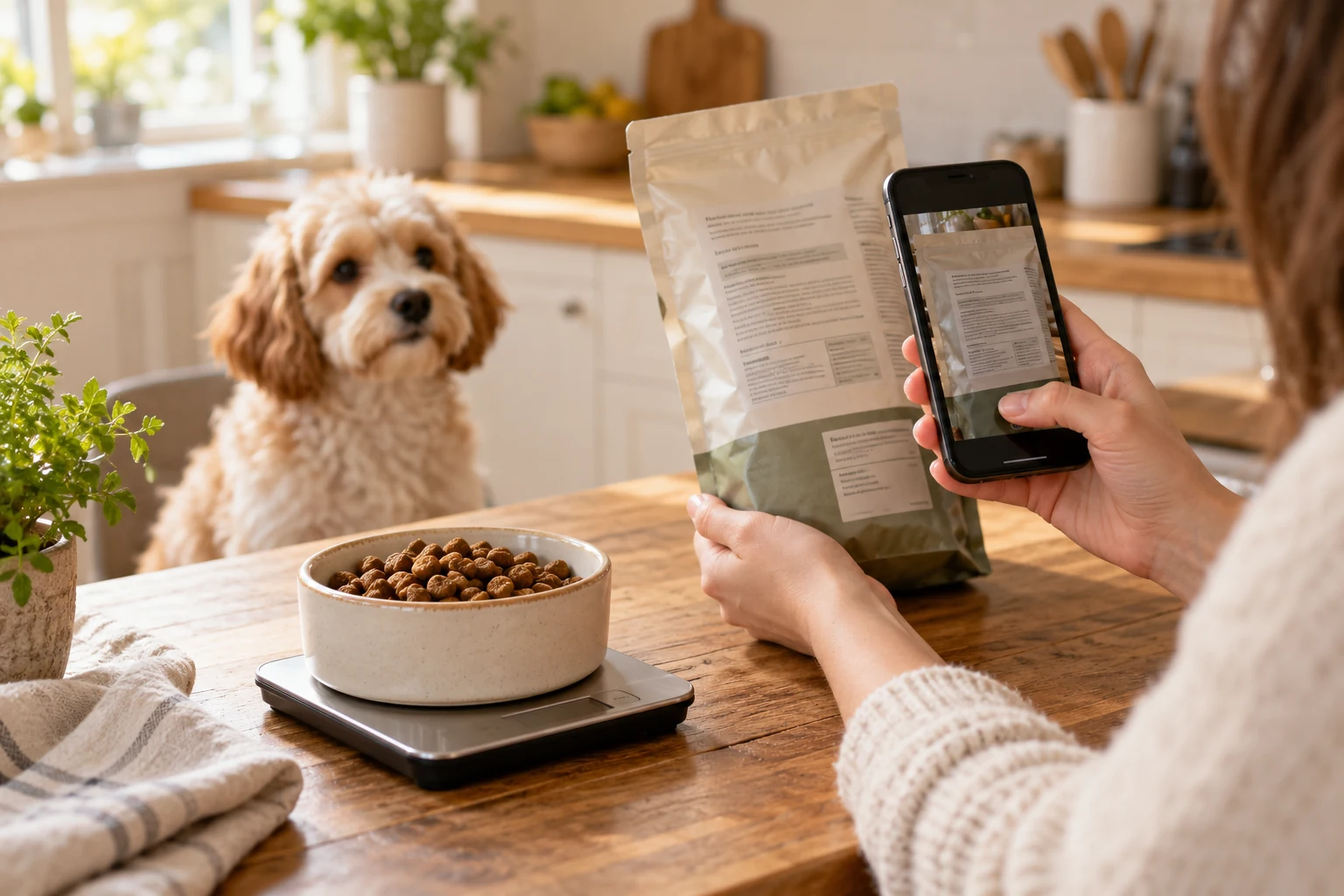
Two bags of kibble can look almost identical and deliver different amounts of energy. Before estimating a portion, find the exact recipe and the calorie unit on the packaging. A front-of-bag photo alone usually leaves important information out.
Take the photos that answer the useful questions
The front: brand, recipe and intended species.
The back or side: calorie statement, feeding guide and nutritional-adequacy statement.
A clear close-up if small print is blurry or hidden by a fold.
In US labelling, calories are commonly expressed as kcal per kilogram and a familiar unit such as a cup or can. Labelling varies by country. Confirm whether the food is intended as a complete diet for the relevant life stage or for supplementary feeding; marketing words are not a substitute for that statement.
Convert the unit before doing the maths
Illustrative calculation—not a feeding prescription
A food labelled 3,600 kcal/kg contains 3.6 kcal/g. If a separately agreed plan allocates 270 kcal a day to this food:
270 ÷ 3.6 = 75 g per day 75 ÷ 2 meals = 37.5 g per meal
The 270 kcal is an example, not your pet’s requirement. It assumes the calories from other foods have already been accounted for. Wet food, dry food and treats each need their own energy density and quantity.
Let a scan save typing, then check it
After a label scan, confirm the recipe, decimal point and unit against the package. A wrong kcal/kg value affects every portion that follows. Weighing food in grams gives a more repeatable record than an unspecified scoop.
A feeding table is a starting point to discuss and monitor, not proof that one amount suits every animal. Ask your veterinary team about the plan if the pet has a special diet or changing needs.
snaps.pet editorial · Updated 5 October 2026 · General education
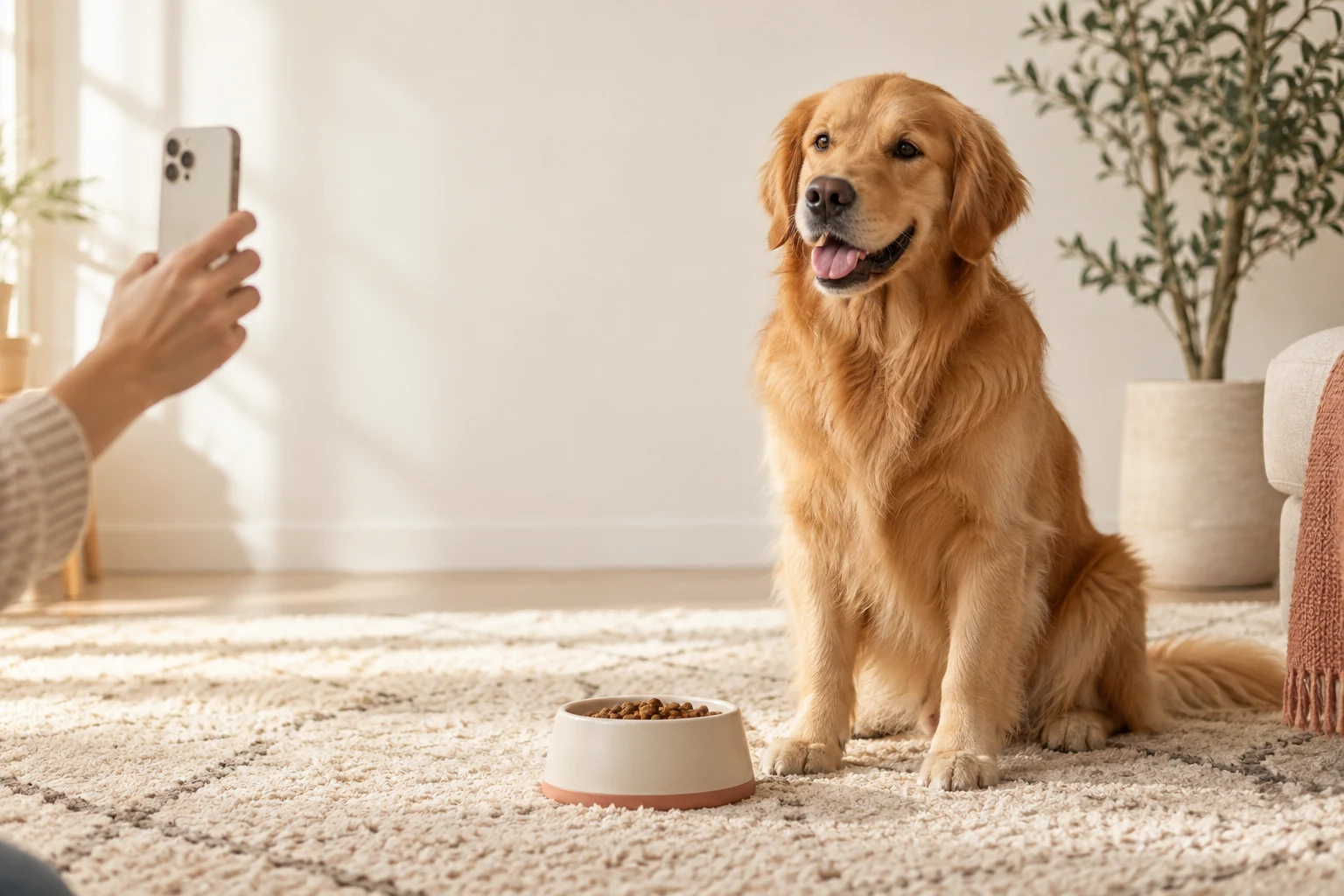
The ordinary photos often become the ones we treasure most: a sleepy face, a favourite window, a muddy walk. A separate set of consistent photos can also make your pet’s history easier to discuss.
Create a simple photo routine
A monthly reminder can be a convenient personal habit; it is not a medical requirement. Choose a bright, calm spot and photograph your pet standing naturally from the side and from above. Keep the distance and angle similar. Let them move away if they are uncomfortable.
Keep the original date and identify the right pet in a multi-pet home.
Add a measured weight separately; never infer kilograms from a picture.
Note a food change or a change in appetite or activity in plain words.
Compare like with like
A curled-up photo and a standing photo can create a misleading impression of change. Lighting, coat length and camera distance also affect appearance. Pair similar views with a dated weight record, rather than interpreting a single flattering or unflattering shot.
Veterinary nutrition assessment considers more than appearance. Photos can help you show a timeline, but they cannot replace examining the animal, feeling body condition or assessing muscle.
Keep memories and private records distinct
Save the playful pictures and the owner-and-pet selfies too. When sharing a card, preview exactly what is included. A public memory does not need a clinic note, phone number, vaccination document or location attached to it. A small snaps.pet mark can identify the app without exposing those details.
If you notice a worrying change, seek veterinary advice instead of waiting for the next photo reminder or an AI interpretation.
snaps.pet editorial · Updated 5 October 2026 · General education
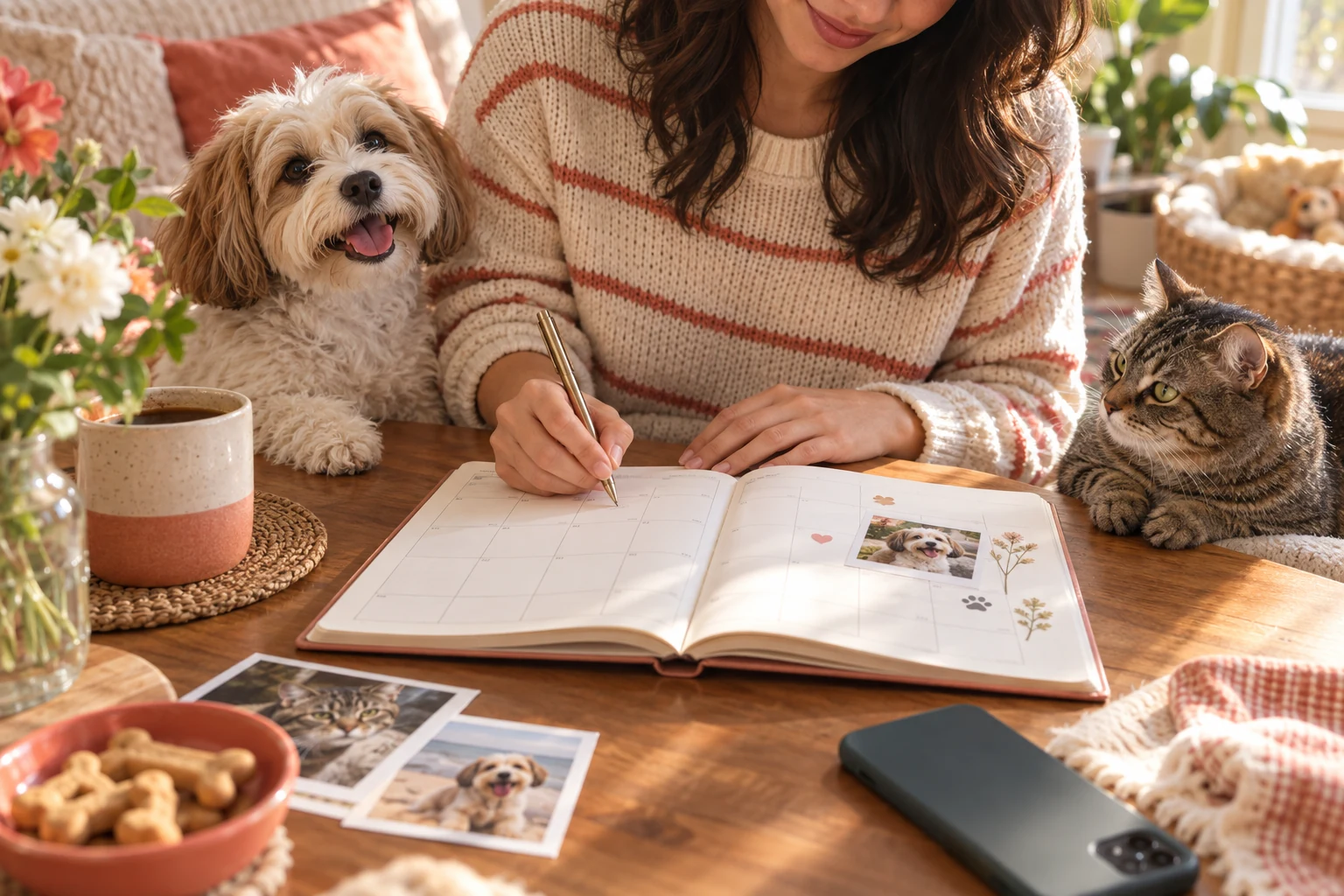
Birthdays and adoption anniversaries deserve a place beside the practical dates: vaccination visits, parasite-prevention reminders, check-ups and follow-ups. A useful care calendar keeps the memories warm and the next actions clear.
Keep three kinds of dates
Celebrations: birthday, adoption day and your first photo together. Mark an unknown birthday as estimated instead of presenting a guess as fact.
Care appointments: the next visit or reminder your veterinary team has given you.
Your own routines: a weight check, grooming appointment or a prompt to restock the usual food.
A reminder is not a completed record
Keep “due”, “booked” and “completed” separate. Once a visit has happened, record the actual date and save the clinic document if you have one. A notification appearing on the phone does not mean a vaccine or treatment was given.
For each entry, save the pet’s name, event, date, time zone and a short note. In a multi-pet home, confirm the right profile before copying a reminder.
Follow an individual care plan
Vaccination recommendations depend on the animal and its circumstances. Use dates confirmed by your veterinary team, rather than one universal schedule for every dog and cat. For prescribed medication, record the instructions already given; a calendar should not create or change a dose.
Make the notification useful
A reminder such as “Milo: book the follow-up recommended by the clinic” is easier to act on than “Pet task”. Test notification permissions and keep essential dates somewhere you can still access if the phone is offline. For anything urgent, contact the clinic rather than waiting for an app alert.
This is the kind of timeline snaps.pet is being designed to bring together: everyday care alongside the moments that make it worthwhile.